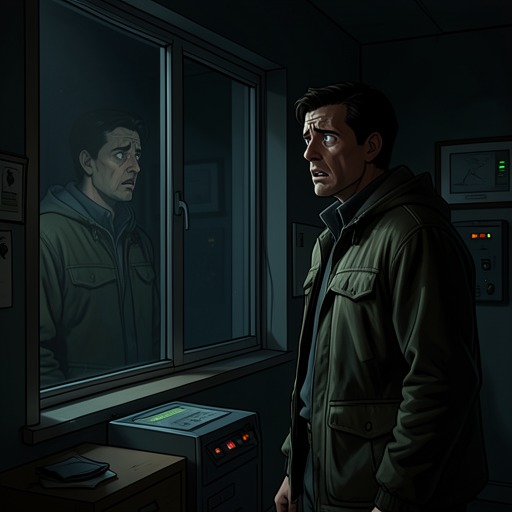
Isaac’s suicidal thoughts and psychological crisis
American RustIsaac’s suicidal thoughts and psychological crisis are shaped by bereavement, self-blame, and the fear that he is repeating his mother Mary English’s fate. His crisis becomes most concrete when he enters the winter river and Poe pulls him out; afterward, the river remains both a remembered threshold of death and a place where Isaac confronts what he has done. The narrative does not present recovery as a single turn from danger to safety: survival brings obligations and renewed connection, but guilt and self-accusation continue to surface.
Background and the River
Isaac reads his own vulnerability through Mary English’s death by suicide. In a recollection of the February river, the cold and the sensation of remaining in the water until pain subsides become part of his understanding of how she died. He imagines that a person might begin to feel warm after enduring the cold, while the living processes hidden in the river eventually bring a body back toward the surface. This reflection makes the water more than a setting: it links his mother’s death to his own dangerous act and gives the river a disturbing appearance of instruction.
The bereavement is also tied to a particular missed moment. Isaac remembers seeing Mary walk down the driveway on what had seemed an ordinary, pleasant day. He had gone back to his reading rather than follow her, and afterward turns that memory into a question of what might have happened if he had acted. He recognizes that he did not know what she intended, yet the uncertainty does not release him from blame. His thoughts circle between the possibility that there was no reason to intervene and the accusation that he let her go. That unresolved memory helps explain why his own crisis is entangled with responsibility as well as grief.
The Attempt and Poe’s Rescue
During the winter episode, Isaac steps onto skim ice and breaks through into the river. Poe panics, then jumps in after him and drags him out; both are left soaked and close to freezing. Isaac later remembers the rescue while walking with Poe beside the river. He had explained his action as an experiment, but the recollection makes clear how little distance there was between that explanation and a potentially fatal outcome. Poe’s intervention interrupts the immediate danger without making the underlying distress disappear.
The rescue becomes a bond Isaac cannot treat as incidental. Poe understands that he once saved Isaac, and later thinks of the two acts as reciprocal: Isaac has now saved him. For Poe, this exchange gives their friendship a reason and weight; for Isaac, it means that another person has witnessed his most dangerous moment and stayed. When Isaac apologizes for what he said about Poe’s father, Poe dismisses the apology rather than turning the rescue into a demand for gratitude. Their brief exchange leaves the relationship intact, even as Isaac continues to struggle with what survival requires of him.
Guilt, Self-Accusation, and Recurrence
Isaac’s distress returns in the way he interprets ordinary choices. In one period of reflection, he weighs stealing, lying, and the ways he believes his family deceives itself. He imagines himself as resembling Mary and fears that remaining where he is will lead toward institutionalization or death. The thought moves between the remembered river, his mother’s fate, and the belief that he may be headed toward the same end. His self-talk does not settle into a stable explanation; it shifts among accusation, bleak prediction, and attempts to interrupt the spiral.
The river also becomes a place where Isaac thinks through the consequences of another death. Sitting by the water, he considers its depth in relation to Mary and the Swede, then turns to the thought that he should surrender. He had expected to be the person who saved others; now his attention is fixed on guilt and on the possibility that the river can make a body disappear without making the underlying act disappear. Poe later objects to the idea that a body placed in the water would simply vanish. The exchange underscores the difference between concealment and resolution: the river can hide evidence for a time, but it cannot undo responsibility.
The novel also lets other characters register the danger Isaac has faced. When Harris approaches while Poe is hunting, Poe fears that the consequences of the factory death will reach Isaac and remembers him as someone who tried to die in the river as Mary did. That fear shows how the earlier crisis remains part of the people around Isaac’s understanding of him. It is not only a private memory; it affects how they assess new threats and what they believe he can endure.
Survival and Continuing Strain
The rescue does not erase Isaac’s distress, and the evidence does not describe his survival as a clean recovery. Later, while alone in his room, he thinks that continuing in his present state could send him back to the river. His mother’s death, his sense of having failed to stop it, and his judgments of the people closest to him gather into an acute episode of physical distress. His heartbeat races, his legs weaken, and he struggles to breathe before the episode begins to pass. He is left shaken and embarrassed, then forces himself to stand and move. The scene marks a crisis that is bodily as well as reflective, but it does not establish that he makes another suicide attempt.
Isaac’s later situation also places survival in relation to other people’s choices. Harris recognizes that protecting Billy Poe may mean placing himself in danger, and frames the decision as a personal trade. That is Harris’s judgment, not a resolution of Isaac’s crisis, but it belongs to the same moral landscape in which rescue, concealment, and responsibility become difficult to separate. In another scene, Harris has not told Isaac that Billy Poe was stabbed and nearly died; Harris’s silence means Isaac is spared that particular knowledge at that moment, while Harris privately concludes that both young men are worth saving.
Across these episodes, the river’s recurring presence prevents Isaac’s near-death from being reduced to a past incident. It joins Mary’s death, Poe’s rescue, Isaac’s guilt, and the possibility of returning to danger. At the same time, Poe’s intervention gives the story a counterweight to Isaac’s isolation: another person acts, follows, and brings him back. The crisis remains unresolved in the sense that grief and self-accusation recur, but the narrative also insists on the obligations created by survival and on the people who continue to regard Isaac as worth saving.